Greek Cuisine and Family Traditions
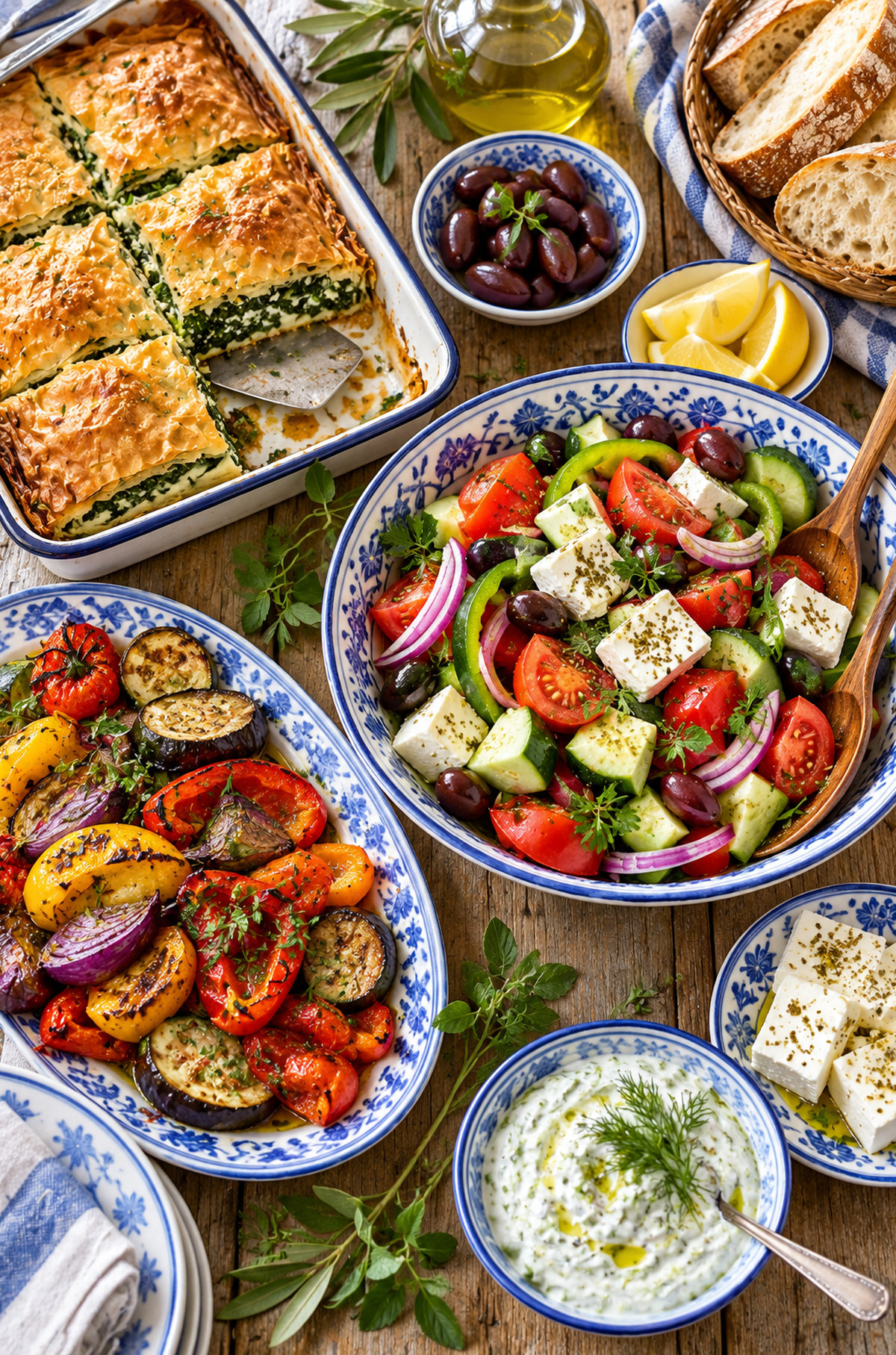
Illustrative selection of dishes; Greek cooking varies by region and household.
Greek cooking varies with local ingredients and historical contact. Greek American households adapted recipes to U.S. markets and family tastes; dishes changed across generations while remaining part of family celebrations and religious observances.
Regional cuisines reflect place and contact
Greek cooking varies across the Aegean islands, the Ionian islands, Crete, the Dodecanese, and mainland regions. Crete is known for barley rusks, tomatoes, olive oil, and local meat dishes; Ionian recipes reflect their history of cultural contact; mainland communities make many savory and sweet pies.
Dish names often travel farther than one recipe. Similar pastries, breads, and stews take different forms from island to island and across the mainland; families may keep a familiar name while changing the filling, spice, or technique.
Olive oil, grains, legumes, herbs, vegetables, fish, dairy, and meat appear in Greek cooking in combinations shaped by season, geography, household means, and religious practice. No ingredient list belongs to every region. A coastal meal, a village feast, and a city family dinner can draw on different local supplies while sharing familiar methods such as baking, grilling, stewing, or frying.
Cooking method changes texture and use as much as ingredients do. A pie baked in a large tray can feed a parish crowd; small folded pastries suit a family table or a bakery counter. Slow-cooked beans work as a meal on their own, while grilled fish may be served with a side of greens or potatoes. These are broad patterns, not rules for every Greek kitchen. Olive oil, lemon, herbs, and garlic recur in many recipes, but their balance changes the character of each dish.
| Place or tradition | Illustrative foods | Regional character |
|---|---|---|
| Cyclades | Handmade pasta, herb fritters, local cheese pies | Island ingredients and techniques vary even among nearby islands. |
| Ionian islands | Fish with vinegar and rosemary, pastitsada, local sweets | Regional recipes reflect histories of contact and local taste. |
| Crete | Dakos, barley rusks, tomato, cheese, olive oil | Local staples shape a cuisine distinct within Greece. |
| Mainland regions | Cheese, greens, herb, and meat pies | One food form can support many fillings and regional methods. |
Familiar dishes on Greek American tables
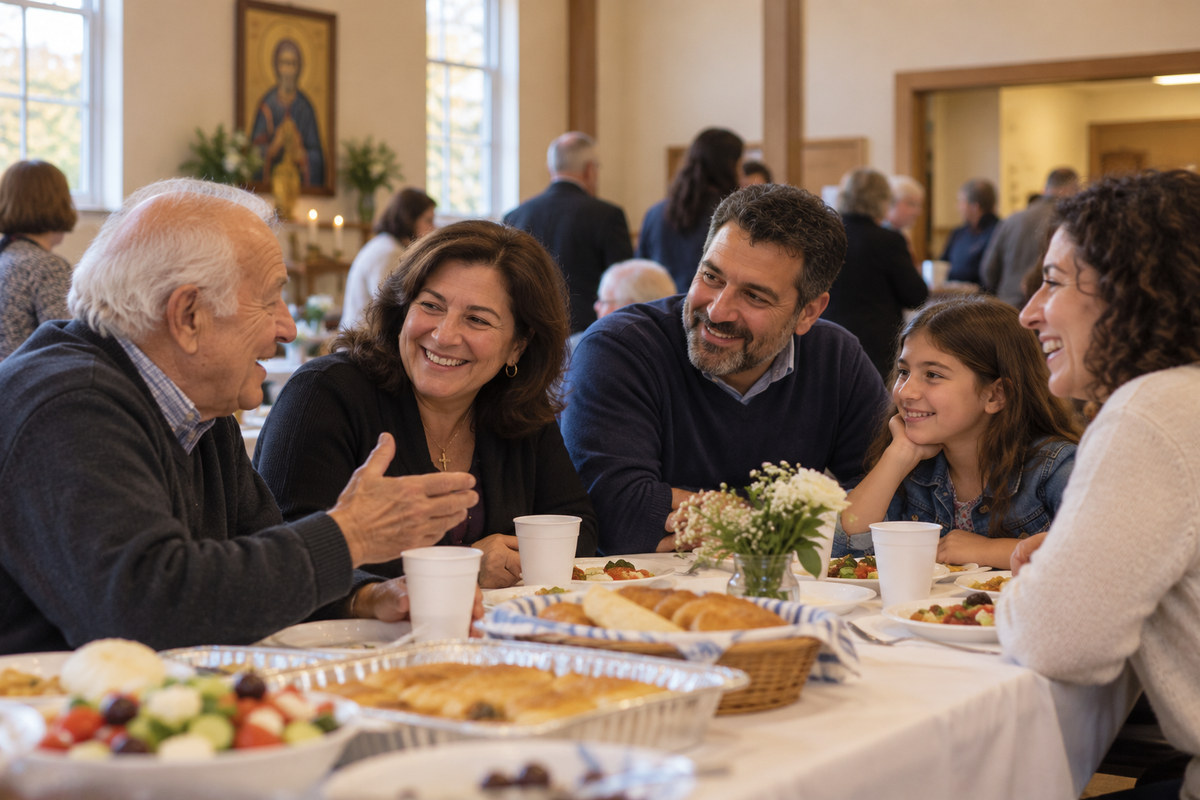
Greek American festivals often serve familiar dishes in large batches, with details shaped by regional and family practice. A parish version may differ from the same food prepared at home, especially in ingredients, equipment, and serving size.
| Dish | Common form | Useful context |
|---|---|---|
| Spanakopita | Layered pastry with spinach, herbs, and often cheese | Families differ in the filling, pastry thickness, and serving occasion. |
| Dolmadakia | Vine leaves wrapped around rice, herbs, or a meat filling | Ingredients and names vary across regions and households. |
| Fasolada | Bean soup, commonly made with vegetables and olive oil | A staple soup can show how legumes anchor a meal without meat. |
| Avgolemono | Egg-and-lemon mixture used in soup or sauce | The same flavor pairing appears in different preparations. |
| Pastitsio | Baked pasta with meat sauce and a top layer that often includes béchamel | Greek American versions may adapt ingredients to local tastes. |
| Baklava | Layered pastry with nuts and syrup or honey | Nut choices and sweetness differ by family and region. |
Food carries family memory
Food connects Greek heritage with family meals, festivals, holidays, and church life. The dishes that feel familiar often reflect where a family came from and which recipes its members carried into later homes.
A dish may recall a grandmother’s kitchen or a parish festival where volunteers prepared a meal for a crowd. Its place in family memory includes the work behind it: who taught the recipe, who cooks it now, and which ingredients changed after migration.
A Greek American cookbook published in New York in 1917 carried Greek-language cooking guidance into American kitchens. Printed recipes moved beyond one household and gave Greek-speaking readers a shared starting point for meals made with local ingredients.
Cookbooks and handwritten cards carry recipes across generations, while each kitchen shapes the result: measurements shift, ovens differ, and familiar dishes adjust to the ingredients at hand.
Fasting and feast days alter the menu
For Orthodox Christian households, the religious calendar may shape what is cooked and when. Fasting periods can involve abstention from certain foods, while Pascha and other feasts bring celebratory meals. Practice varies: some people follow the full discipline, some adapt it for health or family circumstances, and others participate through a shared meal without strict fasting.
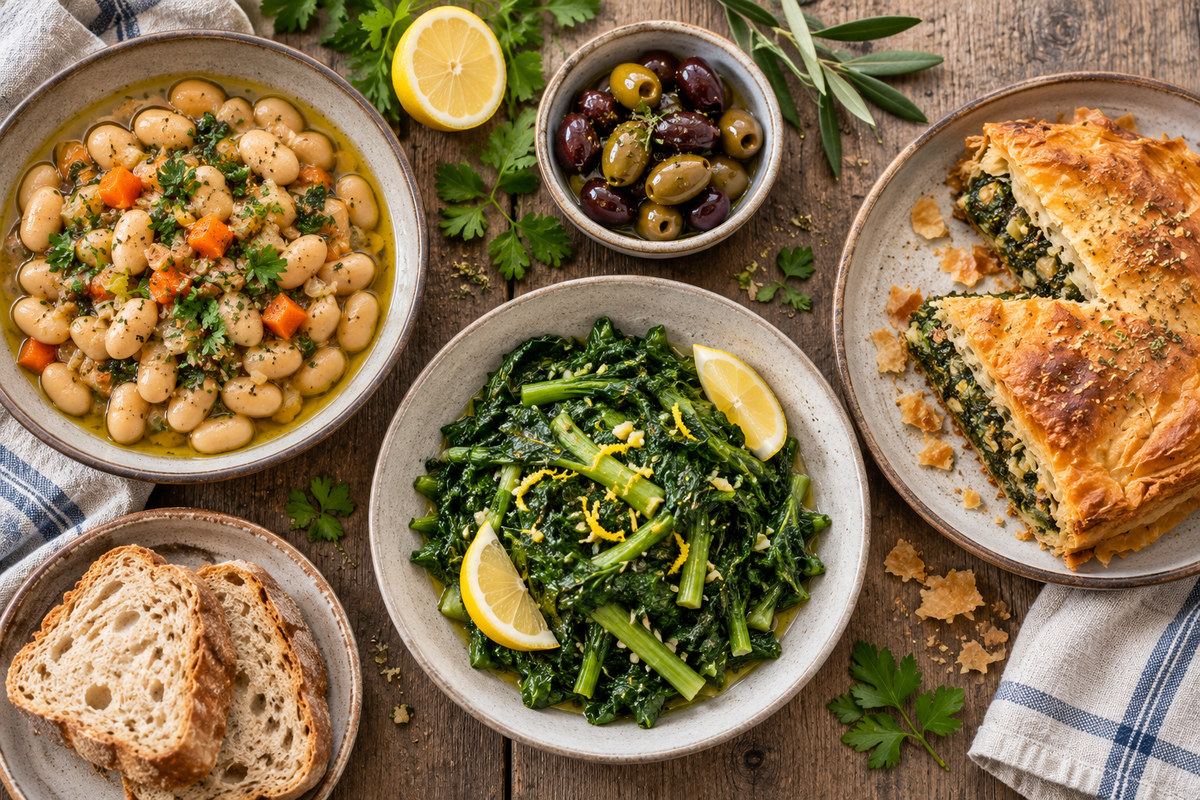
Fasting should not be reduced to a simple “Greek vegetarian diet.” Orthodox fasting rules change across the calendar and may distinguish among oil, wine, fish, meat, and dairy. The same household can cook a plant-based dish for a fast and a rich holiday meal a few days later. Guidance belongs to the family and its parish tradition, not to a generic food label.
Foods also have different roles. A sweet bread may appear at a family celebration; a soup may be served in a home or during a community meal; a dessert may be made in advance for a festival fundraiser. The connection between dish and occasion often matters as much as its ingredients.
Greek American kitchens adapt without losing their roots
Greek American food is also part of a wider American story of migration and small business. Restaurants and diners gave some families a livelihood, created public spaces where neighbors met, and helped turn selected dishes into widely recognized menu items. That experience is not universal. Greek Americans have worked in many professions, and many family kitchens never became businesses.
Festival menus tend to present dishes that can be cooked in quantity and served to visitors. Home cooking can be more regional, seasonal, or tied to a family member’s preference. Comparing those settings prevents a festival plate from standing in for all Greek cuisine.
Meze makes a meal communal
Meze refers to small dishes served to share rather than one fixed recipe. A table may include olives, dips, vegetables, cheese, seafood, or other local foods, depending on region and occasion. Several dishes can be set out at once, so the meal unfolds through tasting and conversation rather than a single plate arriving for each person.
The idea travels easily between home and restaurant settings, but the dishes themselves remain local. A coastal menu may include seafood, while a family gathering inland may draw on vegetables, beans, cheeses, or pies. Shared plates let a meal reflect both the ingredients available and the people gathered around the table.
Texture follows technique
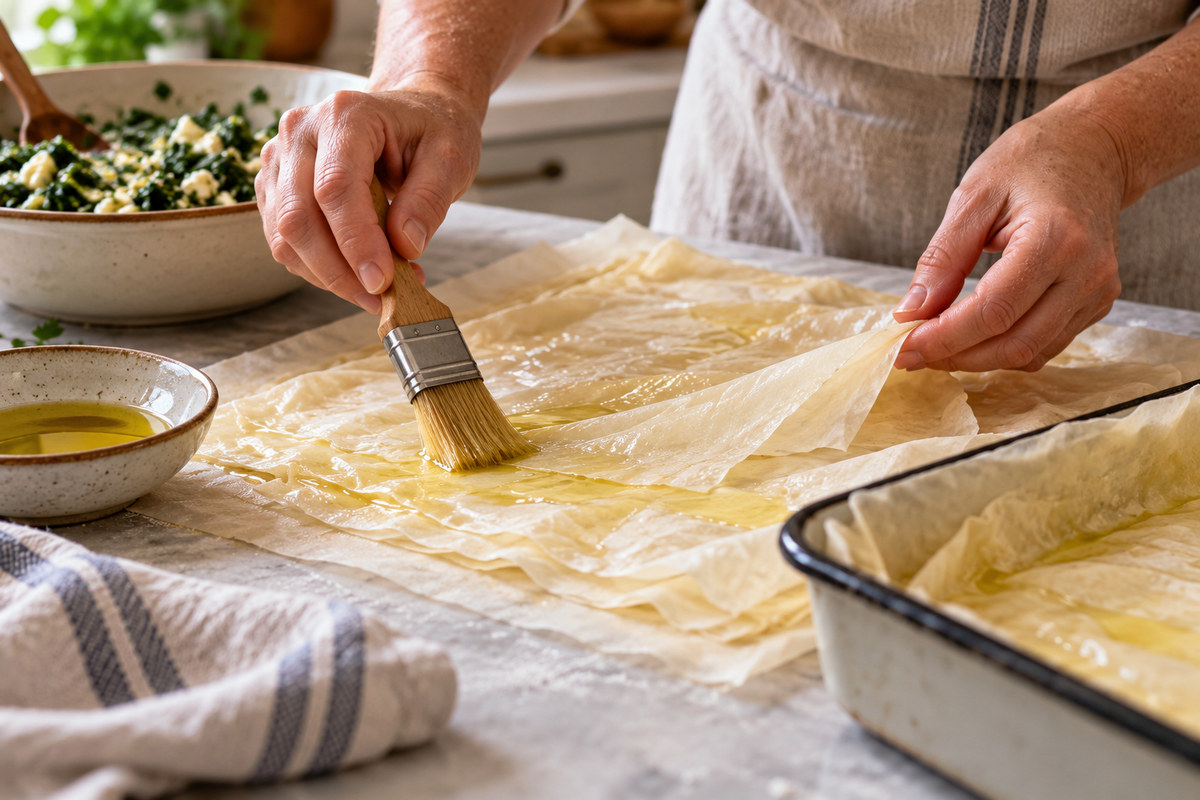
Phyllo pastry changes a dish through its layers: a crisp top can give way to a softer filling, while a folded pastry keeps its shape for serving by hand. Pies baked in a wide pan and smaller pastries may use similar ingredients but produce different textures and portions.
Beans and lentils take on flavor slowly as they simmer with vegetables, herbs, or olive oil. Fish and vegetables may be grilled or baked, while meat stews develop their character through time and seasoning. Technique affects whether a dish feels light, crisp, soft, or substantial as much as the ingredient list does.
A cook preparing for a parish event may choose equipment and batch sizes that differ from a home kitchen. The menu can use familiar recipes while the preparation reflects the number of people being served.
Home tables, festivals, and restaurants
Festival menus introduce visitors to selected dishes, often ones that volunteers can prepare in large batches. Home kitchens preserve other versions, including recipes that rarely appear on public menus. Restaurants add another layer by adapting dishes to a commercial setting and to diners unfamiliar with a particular region.
A tray of spanakopita prepared for a parish festival may use the same basic filling as a home version, yet its size, layers, and serving method change with the kitchen and the crowd. The dish’s name remains recognizable while its scale and texture reflect who made it and where it was served.
At a bakery counter, individual portions are designed for display and transport; at home, the same pastry may be cut from a large pan and served warm with a meal.
Common Questions
How do Orthodox fasting periods shape Greek recipes?
During Great Lent and major fasts, animal products are set aside, inspiring flavorful 'ladera' (olive oil braised vegetables), wild greens (horta), lentils, beans, and fresh bread.
What is the cultural role of the Greek meze?
Meze is not merely an appetizer course; it is a social ritual of sharing small savory plates (olives, dips, cheese, grilled bites) alongside unhurried conversation with family and guests.