Greek-American Family Traditions
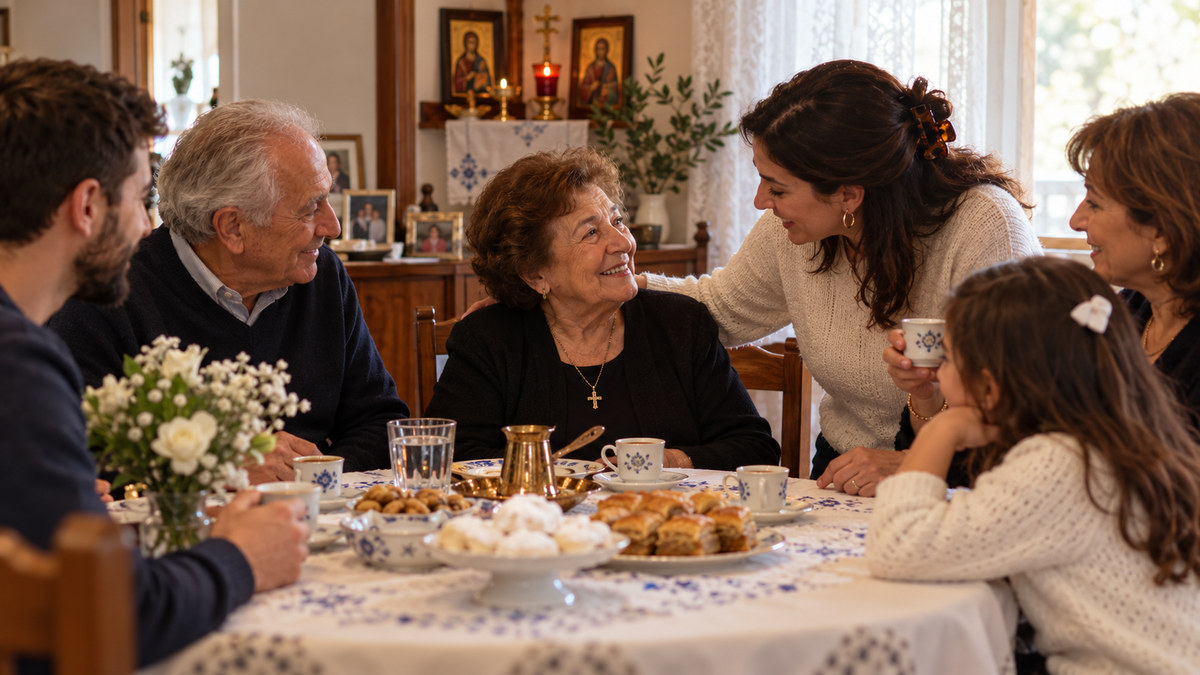
Illustrative family gathering; traditions vary by household.
Greek family and cultural traditions in the United States are carried through worship, meals, names, language, music, and family stories. Greek Orthodox practices provide a calendar and a set of rituals for many households, while families also adapt those customs to regional roots, work schedules, language ability, and personal belief. A tradition can be meaningful without every Greek American family observing it in the same way.
Name days connect a person to a patron saint
In Greek Orthodox practice, a name day is associated with the feast of the saint whose name a person bears or with a holy event tied to the person’s baptism or chrismation. The Greek Orthodox Archdiocese of America describes the name day as a day of remembrance and devotion. Families may attend the Divine Liturgy, display an icon, share sweets, or gather with relatives and friends.
The date follows the church calendar rather than a person’s birthday. When relatives share a patron saint’s name, one gathering can include several celebrants; in another family, only one person marks the feast. Some families gather on the saint’s day itself; others choose a nearby date when more relatives can visit.
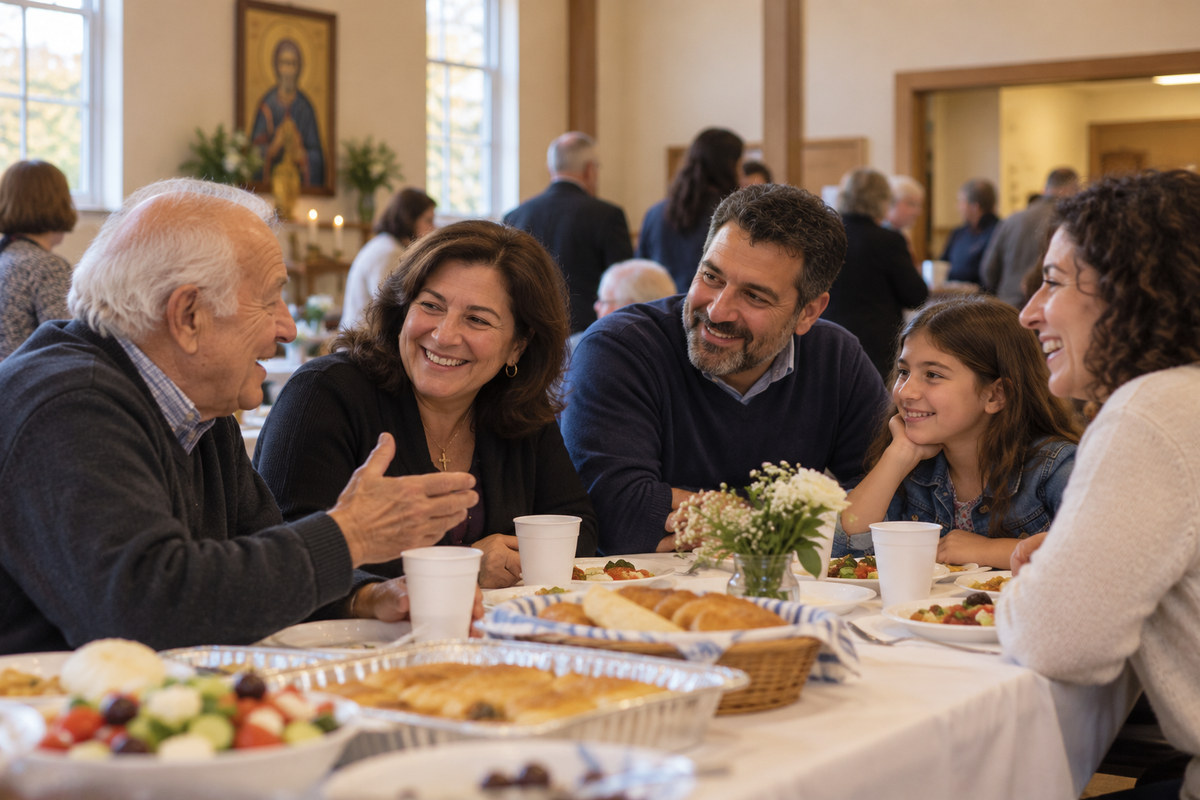
A name-day gathering may include sweets, coffee, or a meal for visiting relatives and friends.
Related names can appear in different forms across Greek and English, so a family may use a patron saint’s Greek name in church and an English form at home. The greeting links an individual’s name with a feast that returns each year for the whole community.
Children can learn a family’s religious history through the name day attached to a parent or grandparent. An icon, a story about a patron saint, or a remembered meal can explain why a name was chosen. Families with different language backgrounds may use Greek and English together, while a simple greeting can carry the same connection across generations. In some households, the greeting itself is the main observance.
Pascha organizes a season of family life
Pascha, the Orthodox celebration of Christ’s Resurrection, is the central feast in the Orthodox calendar. Its services and preparations stretch across Holy Week, making it a season rather than a single meal. Families may attend services, light candles, share greetings, prepare foods associated with the feast, and visit relatives.
Dates in the Orthodox calendar may differ from Western Easter in some years. That difference can affect school schedules, work planning, and family travel in the United States. Some households follow the Greek Orthodox calendar closely; others participate through a particular service or family gathering. The parish’s calendar and each family’s practice provide the relevant details.
Foods associated with Pascha differ by region and household. Red eggs, sweet bread, soup, and roasted meats appear in many Greek Orthodox celebrations, though a family may prepare only some of them or use a local variation. One church cookbook or festival menu cannot speak for every Greek household. Families also differ in how strictly they follow the fast or which services they attend during Holy Week; shared participation does not require identical observance.
Sacraments link family milestones to community
Baptism, marriage, and funerals are family events and acts of the church. Greek Orthodox baptism typically includes triple immersion, chrismation, and the involvement of a sponsor or godparent. The godparent’s role can extend beyond supplying ceremonial items: the relationship may include spiritual guidance and a continuing bond with the child and family.
Each parish sets its own requirements for sponsors, preparation, and scheduling.
Memorial services and funerals bring extended family into a shared religious setting. Remembering the departed keeps names and family relationships present across generations, especially when younger relatives did not know the person being commemorated.
| Milestone | Orthodox element | Family variation |
|---|---|---|
| Baptism | Reception into the church, chrismation, and a sponsor | Celebration size, meal, and family roles differ |
| Name day | Feast of a patron saint or holy event | Some families hold a gathering; others mark it quietly |
| Marriage | Service with crowns and common cup | Reception, music, and regional foods reflect the household |
| Pascha | Holy Week and Resurrection services | Travel, foods, and level of participation vary |
| Memorial | Prayer for the departed | Family meal, cemetery visit, and remembrances vary locally |
The home can carry a small sacred space
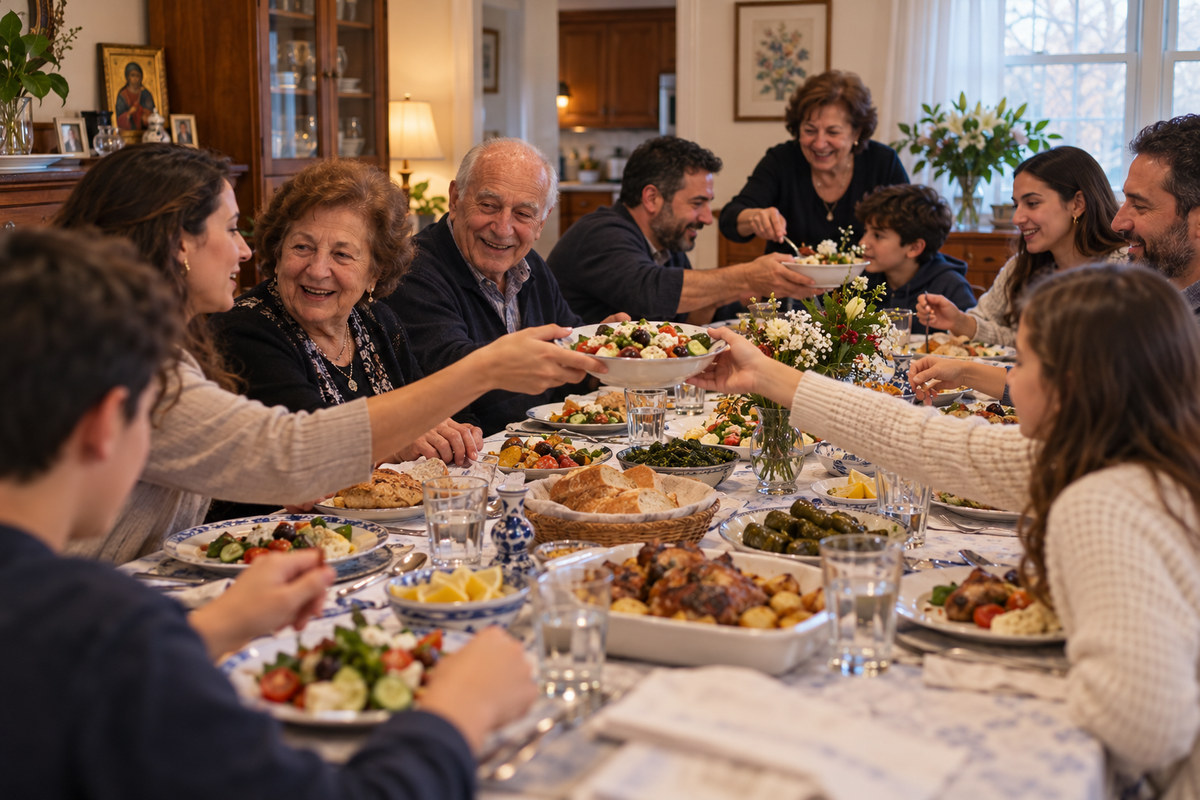
Some Orthodox households maintain an icon corner or a place for prayer. The Greek Orthodox Archdiocese describes icons, prayer books, candles, and church music as elements that help make worship familiar at home. The arrangement can be simple; it does not need to resemble a church sanctuary.
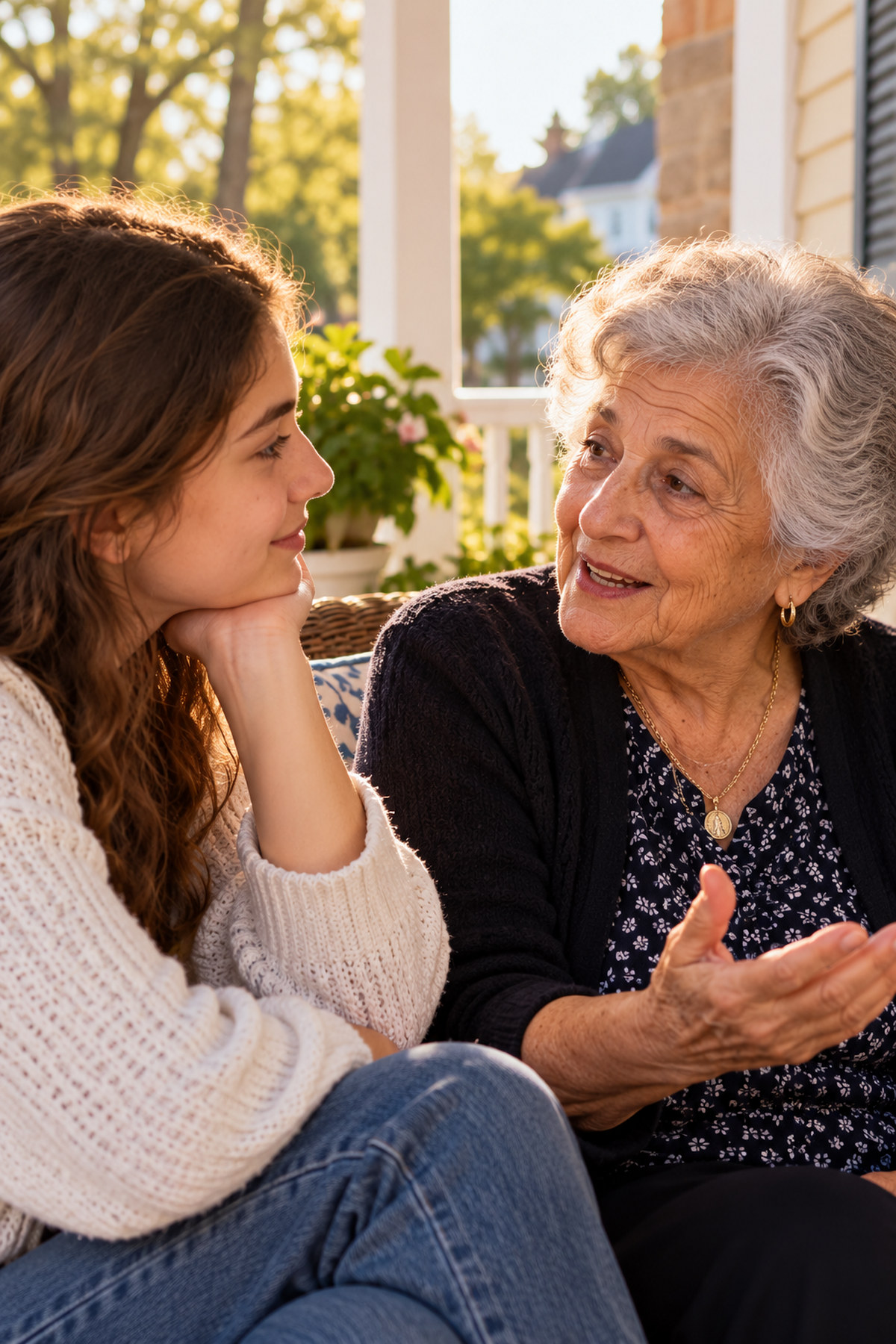
A grandparent may tell a child why a patron saint matters to the family or why an icon appears in a procession. The account need not be a formal lesson; a story attached to a familiar feast can make religious history understandable to a younger relative.
Family religious customs may persist as the household’s language or level of church attendance changes. One generation may keep a practice closely; the next might preserve a smaller part of it, such as a feast day, a prayer, or an icon corner.
Icons at home are part of a wider religious setting, not a replacement for parish worship. A household may use the icon corner for a short prayer before school, during a feast day, or when remembering a relative. The objects and routine vary, but the space can make faith part of ordinary family life rather than only a Sunday activity.
Food is a family practice, not a test of identity
Shared meals often connect Greek American family life with festivals, holidays, and church gatherings. Food can preserve a regional recipe, a grandparent’s technique, or a memory of migration. One household may prepare a full menu for a feast; another may make one dish and buy the rest. Both can have a meaningful relationship to the tradition.
Recipes change when people move. Ingredients may be harder to find, kitchens may be smaller, and family members may prefer different levels of sweetness, spice, or richness. The flavor, the person who taught the dish, and the occasion it belongs to all shape its place in family life.
In households with different fasting practices, meals may include several options, and hosts may explain ingredients without making a guest account for personal choices.
Language, music, and family memory
At home, Greek may appear in a greeting before a meal, a prayer, a term of affection, or the name of a dish. Children can learn these words through repeated occasions even when English is the main language of conversation; a grandparent may use a phrase while cooking, and a younger relative may repeat it years later. The words retain the memory of the person who first used them.
A familiar song can anchor a family memory: the tune an older relative hummed while cooking, the music at a cousin’s wedding, or a melody a child learned during a holiday visit. Years later, the remembered room and people may matter as much as its lyrics. Even someone who cannot translate the words can recognize the occasion where the song first entered family life.
Family stories give customs their local meaning. A name-day greeting may recall a grandparent’s patron saint, a dish may carry the name of a town or island, and a photograph may preserve the people who gathered for a wedding or feast.
How traditions are passed on
- Demonstration: a child watches a family member prepare a dish or take part in a service.
- Explanation: someone describes the saint, holiday, regional custom, or family reason behind the practice.
- Participation: younger relatives help with a meal, hymn, dance, or celebration.
- Adaptation: the family changes the language, schedule, or scale while retaining what matters to them.
- Memory: photographs and family accounts keep names, places, and shared experiences present.
Traditions change within a family
A name day may include a church service one year and a small family meal the next. Relatives may exchange Greek greetings in an English conversation, or continue the feast-day custom after moving to another home. The gathering changes with family schedules and language.
During the Greek Orthodox marriage service, crowns and the common cup mark the ceremony. Family and friends witness the rite; afterward, music, food, and the size of the reception reflect the couple’s preferences and regional family customs. Some receptions bring together a large circle of relatives and friends; others remain small.
Common Questions
What is a Name Day (Onomastiki Giorti)?
In Greek culture, a person's Name Day celebrates the feast day of their patron saint. Families welcome friends into the home with sweets and hospitality, celebrating the saint's protection and virtues.
How is Pascha (Orthodox Easter) marked in the Greek household?
Following the midnight Resurrection service, families break the Lenten fast with traditional magiritsa soup and tsoureki bread, cracking red dyed eggs symbolizing the empty tomb and new life in Christ.