St. Basil Parish Milestones

Illustrative archive still life; not original parish documents.
Several distinct kinds of event anchor St. Basil Greek Orthodox Church’s timeline in Troy. Its founding belongs to 1931; a regional Pontian organization followed in 1941; a ninetieth-anniversary gathering took place in 2022; and later years brought a bishop’s visit and recognition of a priest’s service. Together these events show how religious, cultural, and personal histories occupy the same community.
The timeline distinguishes the date an organization began from the year people gathered to celebrate it. That distinction matters in a parish story: a founding date belongs to the institution, while an anniversary service belongs to the families who return to mark its age.
A timeline of parish and community milestones
| Date | Event | Place in the story |
|---|---|---|
| October 26, 1931 | St. Basil Greek Orthodox Church was founded. | A permanent parish began serving Greek Orthodox families in the region. |
| September 1, 1941 | The Pontos Society of the Capital Region was established. | A distinct organization preserved traditions associated with Pontian Greek heritage. |
| October 22-23, 2022 | The community held its 90th-anniversary observances. | Worship and a broader gathering brought the parish’s history into public view. |
| August 27, 2023 | Bishop Athenagoras of Nazianzos visited St. Basil. | The visit connected the Troy parish with leadership of the wider Archdiocese. |
| January 2024 | Father Emmanuel Mantzouris was honored for forty years of service at St. Basil. | The recognition marked a long pastoral career within the life of the parish. |
1931: a parish takes shape in Troy
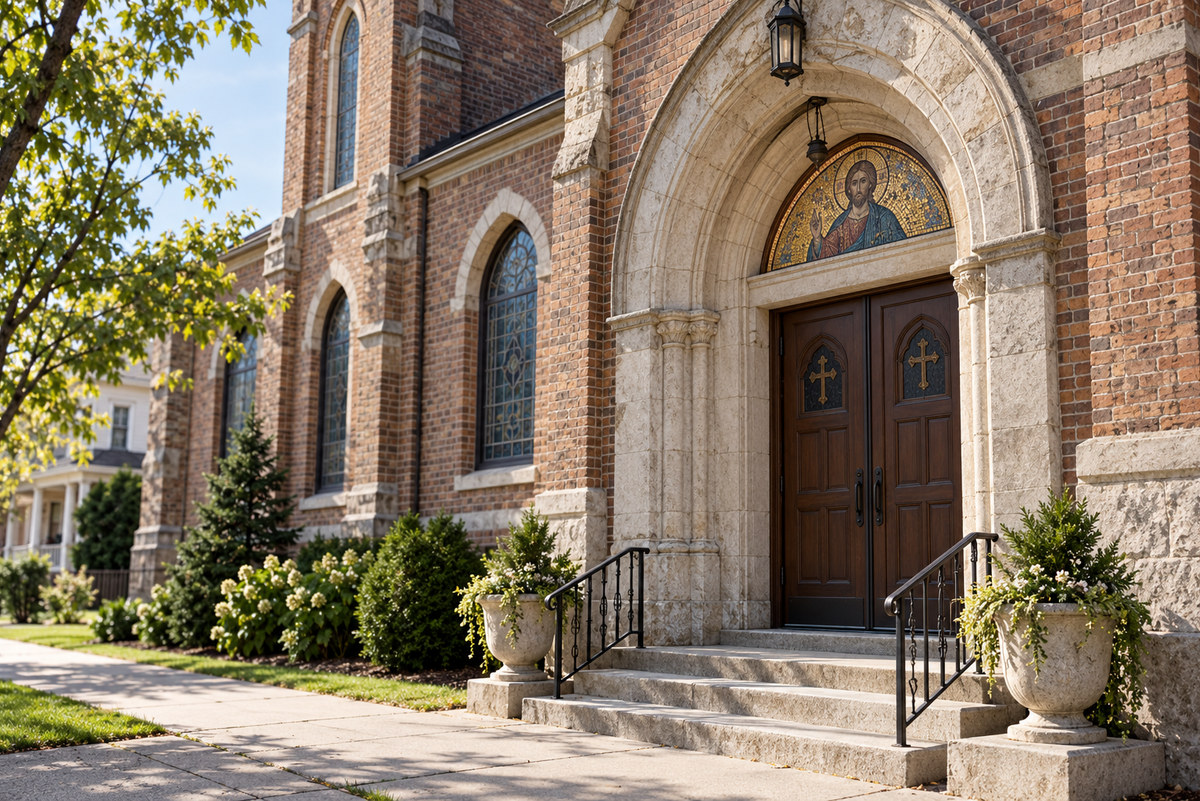
St. Basil’s 1931 founding date places the parish within the early twentieth-century growth of Greek Orthodox community life in the United States. The date marks the organization of the parish, rather than the construction of the present building.
Its setting was a region of connected cities and mill towns along the Hudson. Troy’s industries and transport links brought people into contact with workplaces, neighborhoods, and family networks across municipal lines. A parish serving families across neighboring towns acquired a regional character alongside its identity as a Troy institution.
By becoming an organized parish, the Greek Orthodox community in Troy established a lasting home for worship and parish life. Later milestones included the Pontos Society, anniversary observances, and visits from church leadership.
1941: Pontian heritage gains an organization
The Pontos Society of the Capital Region was established a decade after the parish. Its name points to Pontian Greeks, whose heritage is associated with the Black Sea region and a distinct set of family histories, songs, foods, and commemorations. A regional society gave people with that connection a place to sustain it as part of Greek American life in the Capital District.
The parish’s activities follow Orthodox worship and sacramental life; the Society organizes around Pontian heritage. A household may have a relationship with either organization or both, and neither speaks for every family in the region.
That distinction is useful in reading community history. A single parish can include families whose ancestors came from different parts of Greece, spoke different dialects, or arrived in different periods. Organizations formed around particular traditions make that variety visible in the public life of the region.
2022: an anniversary gathers several generations
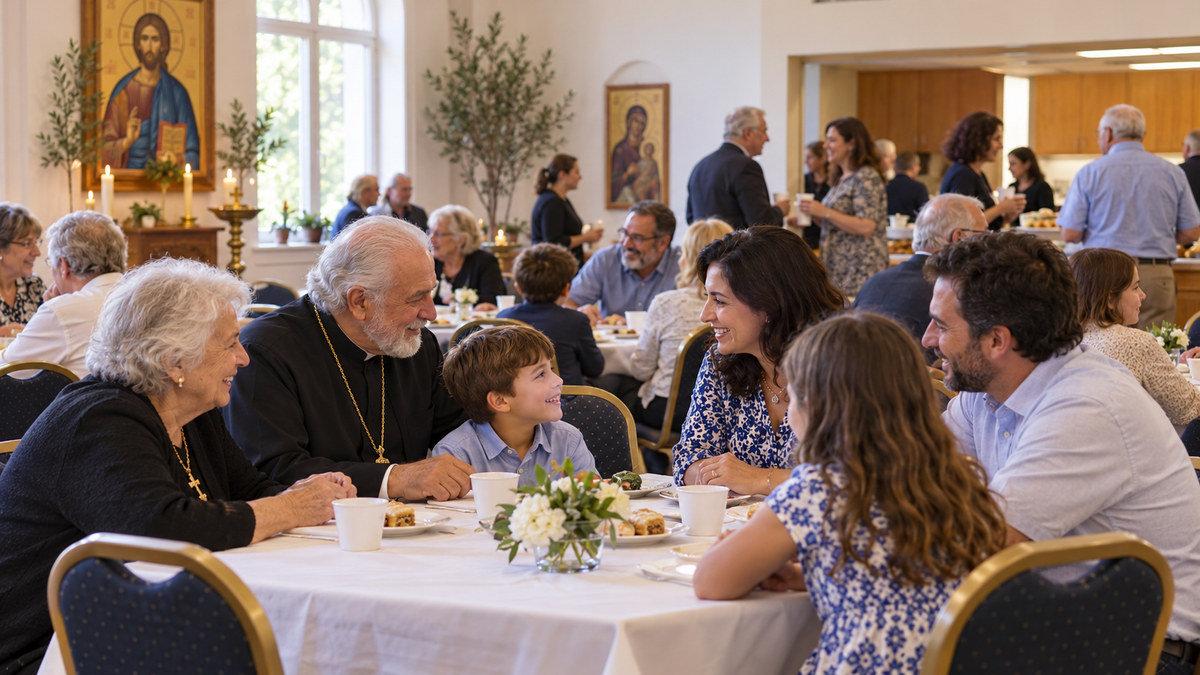
St. Basil marked its ninetieth anniversary on October 22 and 23, 2022. The anniversary liturgy included prayers for parishioners who had died, placing remembrance within the celebration. A wider gathering gave current members and visitors an occasion to reflect on how a local congregation had continued across generations.
The parish reached ninety years in 2021, ninety years after the October 26, 1931 founding. The public observances followed the next October. The difference between those dates is ordinary in anniversary life: the anniversary year is calculated from the institution’s beginning, while a gathering may be arranged for a later weekend that suits worship and community schedules.
An anniversary is also a social event. People who attend may have different relationships to the church: some remember decades of parish life, others grew up in families connected to it, and newer participants may be encountering its history for the first time. A shared observance lets those experiences sit alongside one another without requiring a single account of what the parish means.
2023 and 2024: parish and Archdiocesan leadership
Bishop Athenagoras of Nazianzos visited St. Basil on August 27, 2023. The day included Divine Liturgy and a roundtable in the community center. Parish leaders spoke about the church’s history, its place among Orthodox families and the Greek American community, and its future. Such a visit links the local congregation with the Archdiocese while keeping the conversation rooted in Troy.
In January 2024, the Greek Orthodox Archdiocese of America honored Father Emmanuel Mantzouris for forty years of service at St. Basil. The recognition also noted his work as a New York State prison chaplain. His parish tenure and chaplaincy represent different parts of pastoral life: steady service within a congregation and ministry to people beyond its walls.
Leadership milestones have a personal scale as well as an institutional one. A bishop’s visit brings churchwide relationships into a local setting; recognition of a priest’s long service marks years of worship, pastoral care, and presence. The events describe named roles, while the daily work of a parish also depends on volunteers, families, and people whose contributions are rarely tied to a public date.
Different dates mark different kinds of time
A parish timeline includes organizational beginnings, anniversaries, visits, and service milestones. These events do not compete for importance. Each points to a different rhythm: an institution is founded once, anniversaries return, church leaders travel between communities, and pastoral service accumulates over many years.
The Orthodox calendar adds a recurring rhythm to the history of an institution. Feast days return each year, while a founding date refers to one point in local history. Families may encounter both kinds of time in the same service season, connecting a parish’s annual worship with the memory of the people who built it.
Families often encounter this blend of recurring and one-time dates through the ordinary calendar of worship. A feast returns each year; a baptism, wedding, memorial, or anniversary gathering belongs to a particular family or generation. Over time, these events become linked in memory even though they have different origins and purposes.
Community life continues between headline dates
Public milestones are separated by years, but parish life is made up of recurring gatherings. Sunday worship, feast-day services, religious education, charitable activity, and family rites keep people connected when no anniversary is approaching. The familiar rhythm can matter as much as a large event because it gives different generations repeated reasons to meet.
Some connections are inherited, while others are renewed. A younger family member may first encounter parish history through an annual service; an adult who moved away may return for a wedding or memorial. Someone arriving through marriage or friendship may build a relationship with the congregation over time. These paths can coexist in one room without becoming identical.
A regional parish also gathers people whose everyday lives are spread across nearby towns. Travel, work, school, and family schedules shape how often a person attends. A church can remain meaningful even when participation changes with age, distance, or circumstance. Community is not measured only by who is present at every service; memory and family ties can continue between visits.
That ordinary continuity helps explain why dates such as a founding anniversary or a bishop’s visit become memorable. They provide a shared point of reference within a longer pattern of worship and relationships. In conversations after a service, an older member may recall an earlier room or a familiar family, while a younger person hears how present-day practice grew from those earlier years.
People as well as dates shape parish memory
Parish history often appears publicly through named occasions, yet each event is supported by many forms of labor. Preparing for an anniversary involves worship, hospitality, planning, and the return of people who may not see one another often. A pastoral recognition rests on years of visits, conversations, teaching, and care. A heritage organization depends on members who keep traditions active through gatherings and intergenerational exchange.
Photographs from a public event can preserve a room, a group, or an expression that later generations recognize. A family looking through the gallery may identify a relative, recall who traveled from out of town, or retell what happened during the service that brought people together.
A photograph from the October 2022 observance can bring a familiar face back into a later gathering. Someone who joined St. Basil afterward may learn the person’s name and story from relatives standing beside them.
Common Questions
What was celebrated during the 90th anniversary observance in October 2022?
Held on October 22-23, 2022 (marking the parish's 1931-2021 ninetieth year), the observance included memorial prayers for departed parishioners and gathered multi-generational families to reflect on nine decades of parish life.
What recent leadership milestones have shaped St. Basil?
On August 27, 2023, Bishop Athenagoras of Nazianzos visited St. Basil for Divine Liturgy and a community roundtable. In January 2024, the Archdiocese honored Father Emmanuel Mantzouris for 40 years of service at St. Basil and his ministry as a New York State prison chaplain.