
The Greek Orthodox Church’s Stance on Gambling
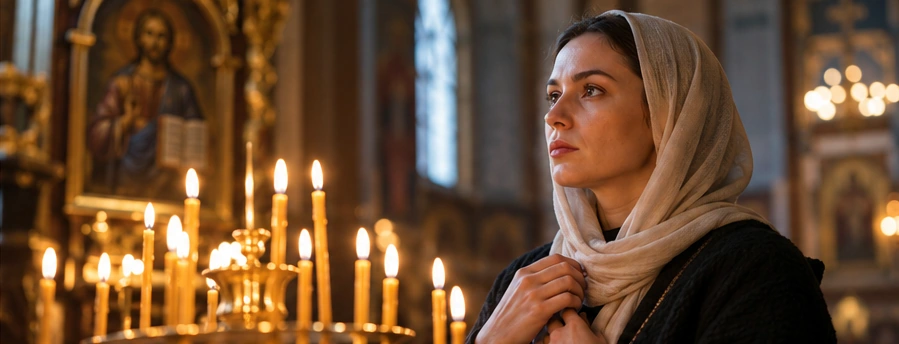
Greek Orthodox worshipper praying beside candles in a church.
The Greek Orthodox Church approaches gambling as a serious moral and spiritual concern, not simply a question of whether a casino, lottery ticket, or sports bet is legal. Ancient Orthodox canons condemn habitual dice-playing, Greek Orthodox clergy have criticized gambling for encouraging greed and disregard for others, and some U.S. Greek Orthodox metropolises expressly prohibit gambling-based parish fundraisers. The crucial distinction is between the Church’s enduring ethical principles, individual pastoral guidance, and rules issued by a particular church jurisdiction.
A small stake may seem harmless. Yet the moral question goes beyond affordability: Why place the bet, who might be harmed, and what habit does it encourage? Legality alone cannot answer that.
Why Orthodox Christianity Treats Gambling as a Spiritual Question
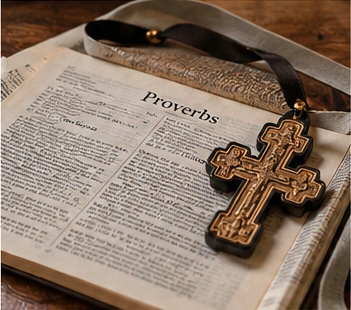
For Eastern Orthodox Christians, everyday decisions belong to the life of faith. Money and leisure can either support generosity and self-control or strengthen attachments that draw attention away from God and other people.
Gambling involves staking something of value on an uncertain outcome in hopes of a return. Casino games, lotteries, paid raffles, cash-prize bingo, sports betting, and online casinos work differently. All can make another person’s loss part of the business model.
Fr. Luke Veronis, in a sermon published by Saints Peter and Paul Greek Orthodox Church, makes love of neighbor the central issue. His argument does not rest solely on whether gamblers can control their spending. It asks what it means to seek a prize through a system sustained by others’ losses, especially when some of those people are vulnerable. This is a pastoral argument from Christian love, not a statistical claim that every single wager produces the same level of harm.
Is Gambling a Sin in the Greek Orthodox Church?
Orthodox moral teaching strongly criticizes gambling driven by greed, compulsion, or disregard for others. That does not mean every Greek Orthodox metropolis in the United States has published identical rules for every kind of wager.
In Orthodox theology, sin damages a person’s relationship with God and neighbor. A single lottery ticket and a destructive betting habit have different consequences, but having enough money to lose a bet does not, by itself, settle its moral value.
Being able to stop is relevant, but it does not make the pursuit of easy money a virtue. Equally, gambling disorder calls for compassion and treatment rather than a judgment about someone’s character.
What the Bible Says About Money, Chance, and Love of Neighbor
Scripture does not name modern slot machines or online sportsbooks. Orthodox Christians instead draw on its teaching about money, work, desire, and their obligations to others.
- 1 Timothy 6:10: the warning concerns the love of money, not the mere existence of money. The distinction matters when assessing the hope of quick wealth.
- Hebrews 13:5 and Ecclesiastes 5:10: contentment stands in tension with the persistent belief that one more win will finally be enough.
- Matthew 22:39: loving one’s neighbor requires considering people who may be harmed by gambling, not just the individual bettor’s enjoyment.
- John 15:13: Christ’s model of self-giving love offers a contrast to recreation centered entirely on personal gain.
- Proverbs 13:11 and 2 Thessalonians 3:10: these passages inform Christian reflection on work, provision, and wealth, although they should not be turned into simplistic promises about financial success.
Does casting lots in Scripture justify gambling?
Proverbs 16:33 refers to the casting of lots, and the Gospels recount soldiers casting lots for Jesus’ garments (Mark 15:24). These passages describe uses of chance in very different settings. Neither amounts to an endorsement of commercial gambling. Drawing lots to settle a question, and paying a bookmaker for a chance at profit, differ in purpose, incentives, and potential consequences. The presence of a random outcome does not make the acts morally identical.
What Orthodox Church Canons Actually Say
Historical Orthodox canon law is unusually direct about certain games of chance. Apostolic Canon 42 concerns bishops, presbyters, and deacons addicted to dice-playing or drinking, directing them to cease or face deposition. Apostolic Canon 43 extends a corresponding warning to subdeacons, readers, singers, and laypeople. The wording is significant: these texts address specific ancient practices and ecclesiastical discipline, not a catalog of twenty-first-century gambling platforms.
Canon 50 of the Council in Trullo also forbids dice-playing among clergy and laity. The later interpretation attributed to St. Nikodemos the Hagiorite expands the discussion to additional games. That interpretation can be read through the published translation and commentary. Historical penalties named in canonical texts should not be represented as sanctions automatically imposed today on everyone who buys a lottery ticket; their contemporary pastoral application depends on church authority and circumstances.
The canons show that Orthodox concerns about gambling predate casinos and phone apps. Their ancient disciplinary language, however, should not be confused with the current policies of every U.S. diocese.
Casinos, Lottery Tickets, Sports Betting, and Online Gambling
Casinos, state lotteries, sports betting, and online casinos differ in access, incentives, and potential harm. Their legal status does not decide whether participation is spiritually sound.
| Activity | Main ethical or practical question |
|---|---|
| Casino gambling | Does an environment built around repeated wagering encourage harmful risk, excessive spending, or social isolation? |
| State lottery tickets | Is the hope of a jackpot displacing contentment, stewardship, or concern for households losing money? |
| Sports betting | Is following a game becoming a cycle of wagers, chasing losses, or compulsively checking outcomes? |
| Online gambling | Does constant access make limits difficult to maintain, especially when wagers can be placed privately at any hour? |
| Bingo and cash-prize raffles | Is the activity a form of gambling, and, if operated by a parish, what does the relevant metropolis permit? |
The commercial setting also matters. A friendly game played without money at stake is not necessarily equivalent to a casino product designed to produce repeated paid wagers. A contest involving skill is not automatically free from gambling-related concerns if it also requires a financial stake and promises winnings. Calling an activity “gaming,” “entertainment,” or “a fundraiser” does not answer what participants risk or why they participate.
In a September 2024 commentary, Metropolitan Nathanael of Chicago warned about the language used to normalize legalized gambling and its potential to damage human dignity and social connection. His public statement is particularly relevant to a U.S. audience navigating expanding gambling access. It is a bishop’s public moral argument, not a claim that every state’s gambling law is identical.
Gambling Addiction, Financial Hardship, and Family Life
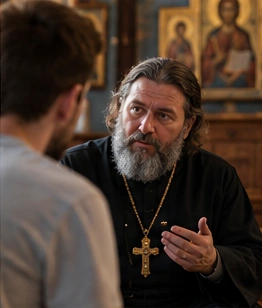
Warning signs include chasing losses, concealing wagers, borrowing to bet, and withdrawing from family life. Gambling disorder is a clinical condition, not simply weak willpower.
Confession, repentance, prayer, and pastoral conversation may help someone face secrecy or guilt. They cannot replace clinical care for compulsive gambling. Relatives may also need support when debt and broken trust affect the household.
People who gamble to escape loneliness may need something more concrete than a warning against temptation. Fr. Luke Veronis identified the appeal of casino outings to people seeking company and suggested that church communities cultivate meaningful fellowship. That concern connects the issue to human dignity: the goal is not only to stop an activity but to replace it with relationships and purposes that genuinely sustain a person.
When gambling threatens rent, food, savings, or the safety of a household, reducing access to betting and seeking specialized help becomes urgent. In the United States, the National Council on Problem Gambling provides information about assistance and treatment resources. A parish priest and a licensed clinician can play complementary roles.
Why Some Greek Orthodox Churches Prohibit Gambling Fundraisers
Parish fundraising raises a different question from personal gambling. Someone may buy a raffle ticket intending to support a church, but the chance of a prize makes the transaction different from an unqualified donation.
The Greek Orthodox Metropolis of Boston provides a documented example. In a November 10, 2016 letter to clergy and parish councils, Metropolitan Methodios stated that his metropolis categorically forbids gambling as a way of raising parish funds. He grounded that position in the writings of Orthodox moral theologian Fr. Stanley S. Harakas, whose discussion contrasts gambling incentives with the spiritual meaning of Christian stewardship.
A worthy charitable purpose does not automatically justify every method of raising money. Christian stewardship seeks gifts offered freely, without a promised chance of financial return.
Other metropolitan administrative materials, including those associated with the Greek Orthodox Metropolis of Pittsburgh, reference restrictions on raffles. Parish leaders should consult the applicable metropolitan documents and obtain guidance from their own clergy and hierarchy before announcing bingo nights, drawings, or prize-based events. It would be inaccurate to treat Boston’s documented policy as if it automatically governed every Greek Orthodox parish in America.
Are all church raffles forbidden?
A paid cash-prize raffle, a free door-prize drawing, a silent auction, and a direct donation are not interchangeable. Before planning an event, a parish council should identify the format and check the rules issued by its own metropolis.
Christian Stewardship: An Alternative to Gambling-Based Giving
Christian stewardship means using one’s time, abilities, relationships, and money faithfully. Donations arise from gratitude rather than the hope of a payoff. That difference matters even when a raffle and a direct gift could raise the same amount.
A parish seeking to replace cash-prize raffles can invite recurring pledges, explain ministry expenses openly, organize volunteer-supported community meals, and ask parishioners to give directly toward a clearly defined need. Transparent budgets and visible service to neighbors can make the purpose of each contribution easier to understand. Whether a specific event is permitted remains a question for the parish’s governing church authority.
At home, the choice may be simpler: does money set aside for a bet belong instead in the food budget, emergency savings, debt repayment, or help for someone in need? The point is to decide deliberately, rather than making chance the priority.
Practical Questions for Greek Orthodox Christians
Is buying one lottery ticket automatically the same as having a gambling addiction?
No. A single purchase does not establish gambling disorder. But the absence of addiction does not end the spiritual question. A person can examine motive, risk, impact on others, and whether seeking a windfall conflicts with contentment and stewardship.
Is sports betting different from gambling in a casino?
The setting and product mechanics differ; both can involve staking money on uncertain outcomes. Familiarity with sports does not remove financial risk or the possibility of chasing losses. An Orthodox moral assessment considers those mechanisms rather than accepting advertising labels.
Can Orthodox Christians play cards or board games for fun?
Recreational games without stakes should not automatically be described as equivalent to commercial gambling. Historical canonical interpretations sometimes speak broadly about games; questions about a particular game, wager, or longstanding custom deserve conversation with one’s priest rather than a sweeping online verdict.
Does a church raffle become acceptable because the proceeds go to charity?
Not necessarily. Metropolitan Methodios’s reasoning explicitly challenges the idea that a good financial destination settles the moral suitability of gambling-based fundraising. Local metropolitan policies must also be checked.
What if I have already lost money gambling?
Avoid trying to recover losses through another bet. Protect essential expenses, disclose the situation to someone trustworthy, and seek professional help if stopping is difficult. Spiritual guidance may be valuable alongside practical financial and clinical support. Repentance in Orthodox life means turning toward healing, not abandoning hope.
Do Greek Orthodox churches in the United States all follow the same gambling policy?
They share Orthodox Scripture and canonical tradition, but published local administrative policies and pastoral applications should not be presumed identical. Check the Greek Orthodox Archdiocese of America’s relevant metropolis and ask parish leadership about the rule that actually applies.
A Responsible Orthodox Approach to Gambling
Scripture, Orthodox canons, pastoral teaching, and metropolitan fundraising policies address different situations, yet they share a concern for spiritual freedom, stewardship, and the welfare of others. Neither legality nor a charitable purpose settles every ethical question.
Before betting, consider what is at stake and whether the habit could harm anyone. If stopping has become difficult, seek a qualified clinician as well as pastoral support. For church events, consult the applicable metropolitan rules before using games of chance to raise funds.