Greek-American Heritage Across Generations
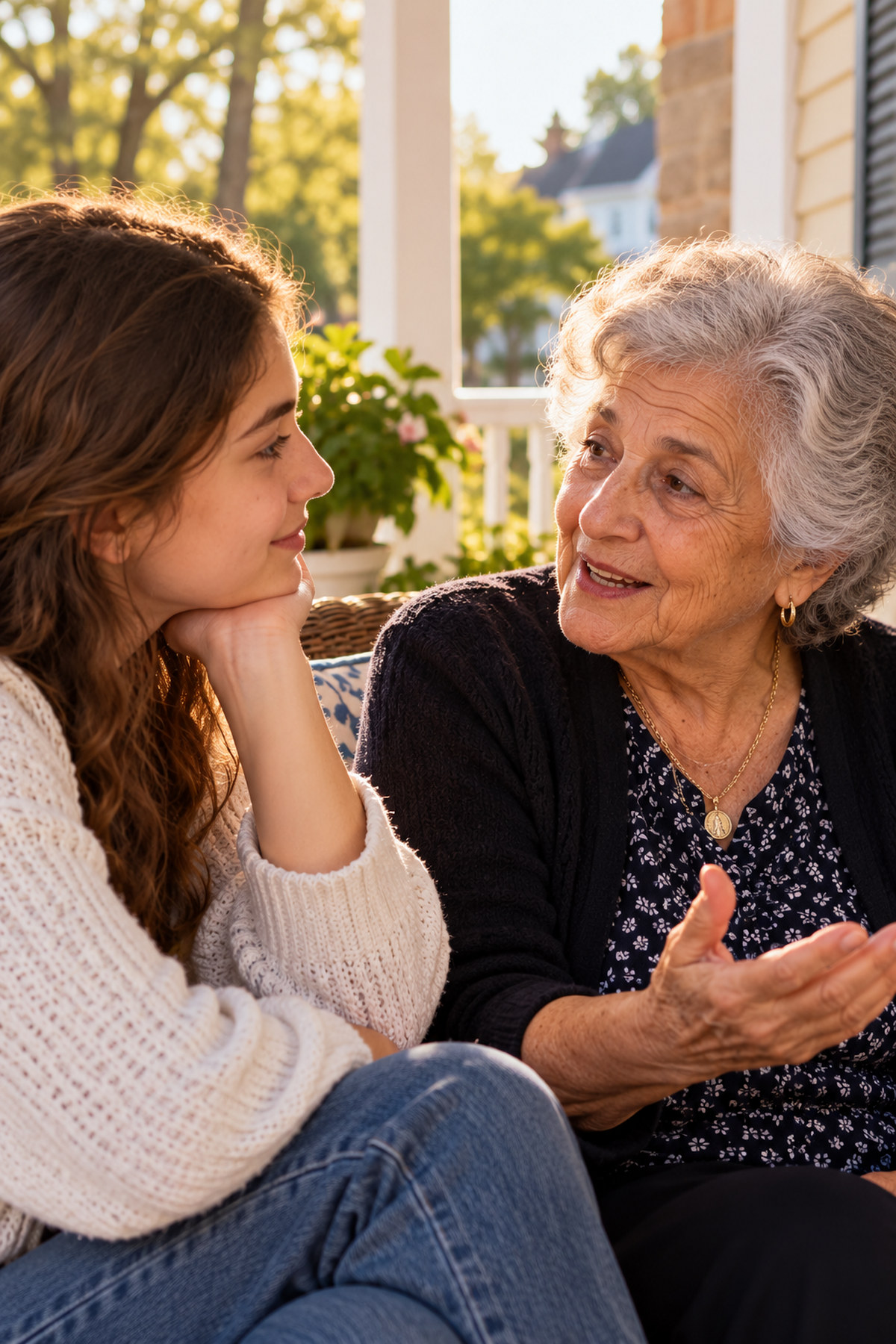
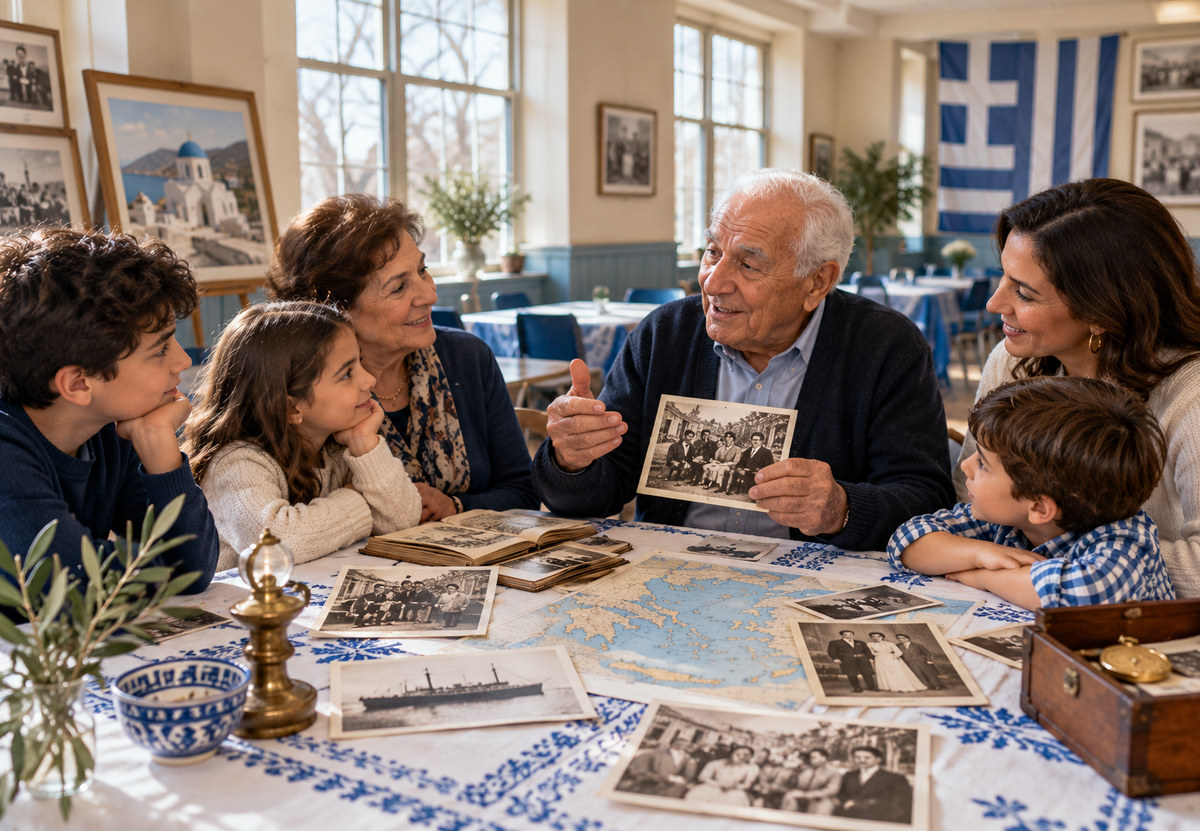
Illustrative family scene representing one of many ways heritage is shared.
Greek American heritage takes different forms across households, regions, and generations. Food, language, religion, ancestry, and civic life may intersect, but no one of them defines the whole experience. The connection may come from migration, family, a parish, a cultural organization, or a relationship to Greek history.
What the label can include
“Greek American” can describe a person born in Greece who settled in the United States, a U.S.-born child of immigrants, a descendant several generations removed, or someone connected through marriage and community life. The phrase can describe ancestry, self-identification, religion, language, civic participation, or a combination of them. None of those dimensions automatically predicts how a person lives.
A Greek American family may share a holiday with a fluent grandparent, an English-dominant child of immigrants, and a relative connected through marriage. The same gathering carries different associations for each person; birth in Greece and fluency in Greek are not prerequisites for family connection.
Family stories often connect migration with ordinary details: the first job in a new city, the relative who helped someone settle, or a custom that changed after arrival. Those details make heritage personal. The same family may remember a different part of the journey depending on which generation tells the story.
Migration came in different periods
Greek migration to the United States predates the twentieth century, while larger numbers arrived during the late nineteenth and early twentieth centuries. People left for different reasons: economic uncertainty, labor opportunities, political upheaval, and conflict all shaped movement across the Atlantic. Many early arrivals were young men who expected to work temporarily. Some returned; others settled, married, or arranged for relatives to join them.
Immigration restrictions changed the size and timing of later movements. The quota laws of the 1920s sharply limited immigration from southern and eastern Europe. The Immigration and Nationality Act of 1965 ended the national-origins quota system and was followed by a new period of migration from Greece and Cyprus. The families who arrived during one period did not share the same experiences as people arriving decades earlier.
Settlement patterns varied by region. Greek immigrants and their descendants built communities in large cities and in smaller industrial towns. New York became a major center of Greek American life, yet local histories also belong to places far from New York City. Across the country, churches became local anchors in large cities and industrial towns. Each parish reflects its own migration patterns and surrounding community; no single origin can represent the history of Greek Americans nationwide.
Three migration periods, three different settings
| Period | Broad setting | Common family experience |
|---|---|---|
| Before 1880 | Smaller numbers of Greek arrivals and earlier settlements | Early migration often followed trade, port connections, or family ties. |
| Late 1800s to early 1900s | Mass migration during industrial expansion and changing conditions in Greece | Industrial towns and growing cities offered work and new family networks. |
| After 1965 | New migration under a changed immigration system | Education, careers, and family reunification shaped many later moves. |
Institutions carried memory into public life
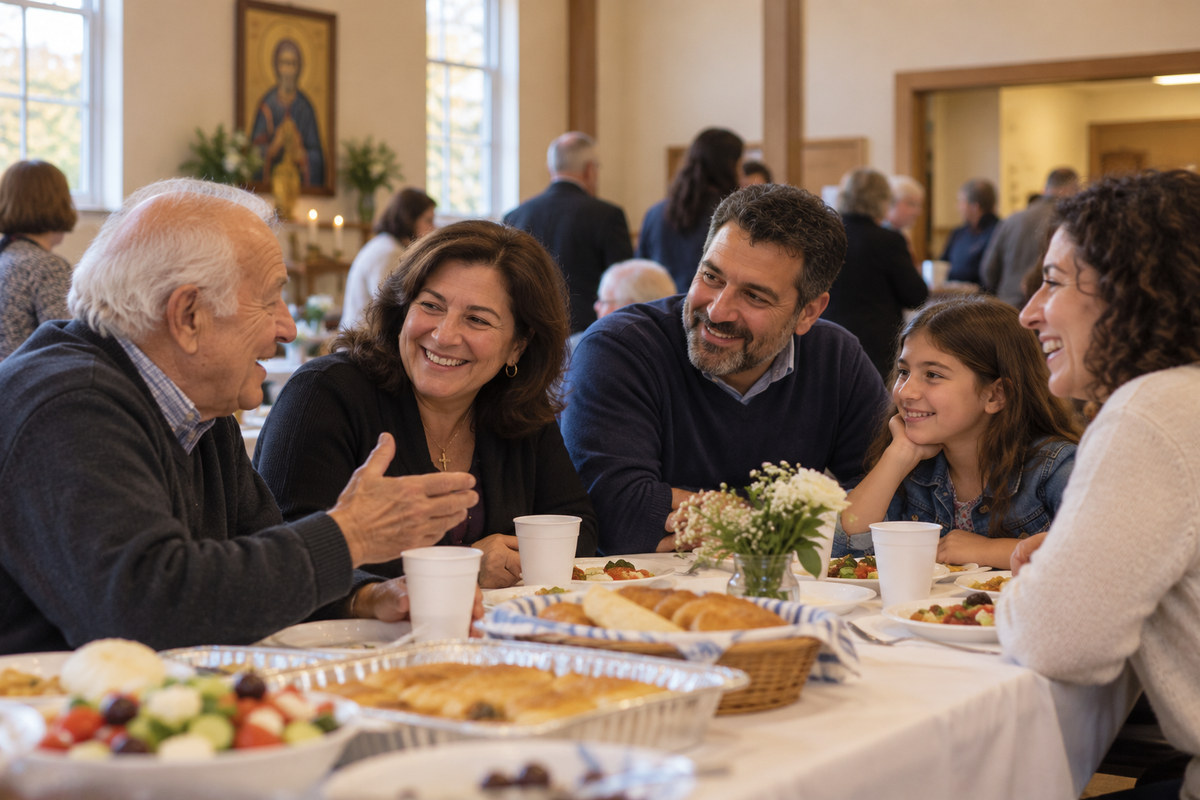
Greek Orthodox parishes often became anchors for worship and community organization. Some also supported Greek-language schools, youth activities, social groups, and charities. A parish could offer a familiar calendar in a new country: Sunday worship, saints’ feast days, Pascha, baptisms, weddings, memorials, and community meals all connected individual households to a wider congregation.
Greek-language newspapers circulated in cities such as Chicago, Boston, and Manchester, New Hampshire. Each paper spoke to a local readership and reflected its own political debates. Together they point to Greek-speaking communities spread across the country rather than confined to one enclave.
Small businesses became visible parts of Greek American life. Family restaurants, diners, groceries, and other enterprises joined economic survival to social contact. The story is more varied than the familiar diner image: Greek Americans worked in many sectors, built professional careers, and participated in labor, civic, religious, and educational institutions.
Institutions adapt as generations change. A Greek school may shift from language instruction to cultural education. Parish worship may use more English as the congregation changes. A society formed around a regional identity can preserve a memory that a broad ethnic label would otherwise hide. These shifts are signs of a living community, not proof that heritage has vanished.
Language is one channel, not the whole inheritance
Greek language can connect a household to relatives, songs, prayers, literature, and place names. It can also be unevenly transmitted. One generation may speak Greek fluently; the next may understand family conversation but answer in English; a later generation may know only greetings, foods, and religious terms. Each pattern reflects family history rather than a pass-or-fail test of identity.
Schools and parishes have helped families pass on Greek language and history. A child may study reading, writing, or religious tradition in a parish program, while a modern class may pair conversation with music, dance, or heritage activities. Programs differ with the community and the families they serve.
Translation also changes cultural memory. A hymn sung in Greek may retain an old sound even when most listeners follow the service through English. A family story translated by a grandchild may preserve its emotional meaning while losing a dialect word. The distinction between fluent speech and cultural connection matters when a community describes itself.
Heritage is regional within Greece, too
Greek American families may trace roots to islands, mainland regions, Constantinople, Asia Minor, Pontus, Cyprus, or other places tied to Greek migration. Food, music, accent, religious customs, and family histories can vary across these communities. A regional name may carry memories of displacement or political violence that do not appear in a general account of Greek immigration.
Pontian Greek heritage is one regional strand within Greek American life. Pontus lies along the Black Sea coast of Asia Minor, and families with Pontian roots may carry distinct migration memories, music, food, and family histories. That regional identity is important on its own terms; it does not stand for every Greek community.
Daily practice also includes family habits, religious observance, local history, and forms of identity that rarely appear on a festival stage.
How heritage changes between generations
- Family memory: stories about arrival, work, home villages, names, and relatives.
- Religious practice: parish worship, feast days, icons, sacraments, and community service.
- Public culture: festivals, music, dance, food, language programs, and regional societies.
- American civic life: education, professions, local politics, volunteering, and neighborhood institutions.
- Personal choice: the way each person chooses to identify or reconnect with a family history.
A person may value Greek food and family stories without being religious; another may take part in Orthodox worship without speaking Greek. A third may have a Greek surname and little information about the family’s migration.
Identity grows through family relationships
Greek American identity can be present in a household even when its members express it differently. An older relative may speak Greek every day, a parent may use it mainly with family, and a grandchild may know a few phrases tied to meals or holidays. Their connection can be shared without requiring the same language fluency or level of participation.
Family stories often attach heritage to particular people and places: a relative who crossed the Atlantic, a town remembered in a surname, or a home in which Greek was heard at dinner. These memories are not identical from one person to another. They become part of a common inheritance through conversation, celebration, and the choices each generation makes about belonging.
Common Questions
How did different migration waves affect Greek-American life?
Early 20th-century arrivals established churches, fraternal lodges, and small businesses; post-1965 migration renewed ties to contemporary Greece; today, multi-generational families sustain cultural identity through heritage and faith.
Can Greek heritage thrive across language transitions?
Yes. While Greek language study remains valued, heritage is equally expressed through liturgical cycles, family recipes, dance, patronal name days, and communal ethics.